Blog # 13 -Salvador Dali to Ernest Hemingway and everything in between
- Pamela Sonier
- Mar 27, 2025
- 40 min read

Our first taste of Florida as we drove along the Gulf Shores coastlines on our way to Pensacola was white sandy beaches, palm trees, long bridges, tall skyscraper resorts, boats galore, golf carts for sale everywhere, and of course sunshine. It almost felt like we had entered a different world or at least a totally different part of the world after coming out of the wet and cold of Mississippi and Alabama. Our first stop was in Pensacola to check out a couple interesting things. The Crystal Ice House was first. Back in the 1930s these drive-thru Ice Houses were established for people to come and purchase ice. One company decided to make their drive-thru houses look like ice blocks. The outside of the buildings, including the icicles, were made of concrete and painted with a paint mixed with mica so the whole building would sparkle like ice crystals in the sun. The one building we saw did sparkle and had a polar bear on the top of its roof. At the front of the building was a slab indicating the use of "Hand Signals for Service”. The buyer would hold up so many fingers to indicate how much ice was needed.


The Crystal Ice House, Hand Signals for Service
Down the road, also in Pensacola, is a graffiti covered railroad bridge. This bridge was built in 1888 and is now covered with all sorts of colourful graffiti art. This artwork is free for all wanting to express themselves and is ever changing. It is quite a popular attraction in Pensacola and we were surprised at the amount of people who were there to walk across the bridge or just take photos. While there, we watched a gentleman in the process of creating a large piece of artwork.


Graffiti Covered Bridge
After Pensacola we traveled to Panama City Beach. The plan here was to take a break from driving and do a three nights stay in a small cabin at the KOA campground. Our stay though was extended a bit more than expected. I ended up visiting the Emergency Department for a diagnosis of diverticulitis. After receiving exceptional medical care, I was prescribed anti-inflammatories and antibiotics and started feeling better a few days after. However unfortunate this experience, we took full advantage of our time here and extended the rent on the one bedroom cabin for a full week. Here we rested. It was beautiful to have space to move around. We made use of a full kitchen, daily hot showers, watched TV, and caught up on things that needed to be done. Of the things to be done was Guy tore apart some of the back wall panels in the roadtrek and fixed broken window screens. We also worked on completing blog number twelve and planned our upcoming travels across Florida. Here at KOA, we found out that the Florida Panhandle, which lies just below the southern part of Alabama, is jokingly referred to as the LA of Florida for “Lower Alabama”.


Just hanging out at the KOA in Panama City Beach Florida
We didn’t do much exploring here as I was not feeling so well, but we did go see the upside down house. In Panama City Beach there is an amusement park for the mind called Wonderworks. It has more than 100 interactive exhibits, ranging from a realistic simulated hurricane to virtual reality and brain puzzles. The only stop we made here was for a photo-op with the upside-down building. This really is quite a neat building with details like palm trees, sidewalks, street lights, and the whole building is upside down. The fictional story is that the building was once a secret lab in the Bermuda Triangle, which was lifted by a tornado and dropped upside down here where it is now located.


Wonderworks - Upside down building
After seven days of rest, feeling much better, and with a half full bottle of antibiotics still remaining, we headed back on the road ready to explore and discover Florida. Not too far from Panama City Beach is Callaway a place where we could see and feed the street goats. These goats have been around since the 1950s when they used to roam freely behind a low fence in a residential area, eating whatever people would leave them. In the aftermath of Hurricane Michael in 2018 they were moved to a safer place where they are now just hanging out in a yard full of scrap steel and metal structures. They seemed quite content enjoying the morning sun when we arrived. Since we did not have food to offer, they soon lost interest in us. So we took pictures, enjoyed, and merely continued on our way down the road.


Street goats of Callaway
Wausau is the “Possum Capital” of the world and it is said there are more possums here than humans. The possums have lived in this area for over a century and they were a food source for the people during the Great Depression and other hard times. Their meat was often the only available protein. The people of Wausau are so forever grateful for these little marsupials that they have built a monument in their honour, and every August the people celebrate with the Possum Festival. This festival has a parade, an auction, and a contest to crown a Possum King and Queen. An interesting fact about this story is that there are no possums in North America. Many Americans use the name “possum” as an informal name for the opossum which are the marsupials here in North America. Possums are native to Australia, New Guinea, and Indonesia. Opossums are native to North and South America. Possums have thick fury trails, round face, short snout, and are Herbivores. Whereas Opossums of the Americas have no fur on their tail, their face is pointed with a long snout, they have sharp teeth, and are omnivores. Interesting stuff, I think….


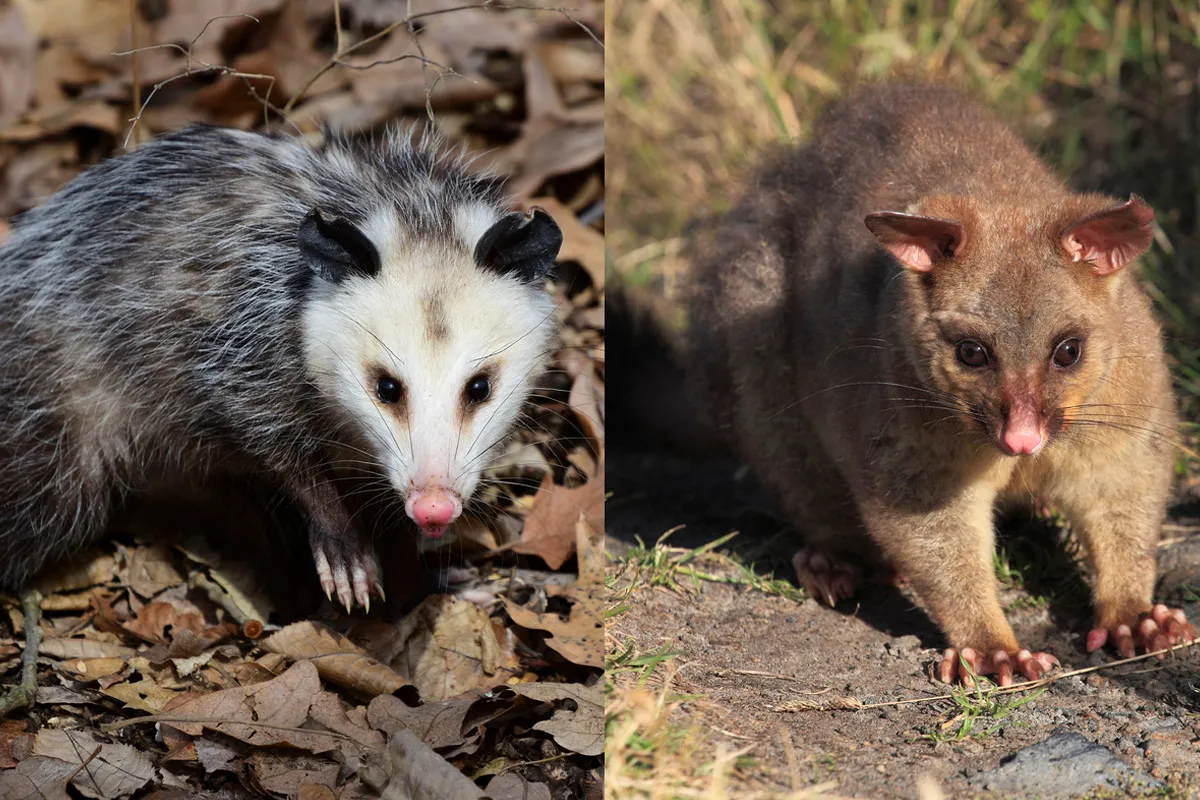
Opossum or Possum Monument - Opossum & Possum
Two Egg Florida, we just had to go and see this town with such a fun and unique name, and of course have our picture taken with the town sign. One must wonder how a town comes up with such a name. There are many different stories but the one that seems the most likely is that during the depression in the 1930s, when many people did not have any money or had very little money, they began to trade farm products for staples at the store. Two boys used to come in with two eggs from their family farm to trade for sugar. The locals began to jokingly call the place the "two egg store", and the name stuck. I had read that the original general store was still there and sold regular staples items like t-shirts, hats, even oil paintings. We travelled up and down the road in Two Egg searching out this store to no avail. We had passed a collapsed rundown building and Guy had first said “I think that’s the store”. I am like, “no that can’t be it it’s supposed to be open”. We asked a couple of highway workers and they scratched their heads but suggested the abandoned and delapitated building around the corner. Sure enough that was it, or what was left of it. On a side note the actress Faye Dunaway spent her childhood years in a small house just north of Two Egg in the community of Bascom.


The original General Store in Two Egg
In Tallahassee we stop outside the house of Bill Brinson. Over the years Bill with a group of his friends designed the Whale Sculpture Memorial in his front yard. There are four whales named Glory, Hope, Faith, and Grace. The reason for this memorial is that after the 9/11 terrorists attacks in the USA, Bill really had a hard time dealing with the tragedy and he said “I’m sad that the world is in the situation it’s in. That’s a cowardly way of doing something. I wish the world could put all its sources together to help one another.” Bill chose whales because they are known as symbols of recorders of time - symbolically, they are supposed to teach us how to honour the sounds of the universe, how to listen to our emotions and feelings, and how to share pain. Every year on September 11 Bill holds a memorial service in his front yard.


Whale Sculpture Memorial
In Gainsville, further down the road, our first stop was a visit to the University of Florida’s Department of Animal Sciences Building to see four aluminum abstract sculptures called “Some Were Quite Blind”. When looking at these, one really has no idea as to what they represent. But thanks to my wonderful Atlas Obscura we know exactly what these sculptures are. They are, according to Atlas Obscura, representations of penises of four animals: a boar, a cat, a bull, and a ram. Why they were built, that is a question that goes unanswered. Beauty really is in the eye of the beholder.


Some Were Quite Blind - Art Installation
Also in Gainesville is The Devil’s Millhopper Geological State Park. This is a massive natural sinkhole 120 feet deep and 500 feet wide across the top. This park is situated right in the middle of an affluent neighbourhood. Around the sinkhole, there is a beautiful one mile flat walking trail. Along the trail there is a set of stairs, 132 steps down to the bottom where there is a rainforest like environment with bright green water fed by 12 ground seeping streams. The name of this place derived not only from its shape which resembles a grain hopper, but also because a large number of animal bones and fossils were discovered at the bottom; even shark teeth, indicating that this whole area was once under water. The saying goes that the animals would go down to meet the devil at the bottom. This stop was a beautiful morning exploration for us and Treme. We did the walk around twice.


The Devil’s Millhopper Geological State Park
We visited the St. Marks Lighthouse, it is the second-oldest light station in Florida. Its construction was completed in 1830 but was refused by the Customs Inspector who said it did not meet the building codes of the time. Since the tower was built of solid walls it did not allow moisture to evaporate and cracks began to appear with the tower settling. Iron hoops were added to the outside to hold the walls together but the condition of the lighthouse continued to deteriorate. It was rebuilt, and began operation in 1831. It stood 65 feet tall. In 1837 a ten foot tidal wave washed away all the buildings surrounding the lighthouse and 8 people drowned. The lighthouse was again rebuilt in 1842 with hollow walls where it still stands today. The light station is located in the St. Marks National Wildlife Refuge which is a beautiful area and a relaxing drive at a maximum 30 mph. We were able to make many stops along the way to the light station to observe cranes, egrets, herons, and many alligators basking in the sun.


St. Mark’s Lighthouse
After the lighthouse, we drove to Manatee Springs State Park where we spent the day and camped for one night. Sadly there was no room available for a second night. The campsite was very peaceful the deer wandered uninhibited by our site. Busy squirrels behind us made such loud noises I kept wondering what might jump out of the bushes. Guy and Treme saw an armadillo in the bushes and Guy said Treme was scared of it - such a guard dog. Walking distance from the campsites there is a boardwalk where we saw the manatees. We spotted a few manatees gracefully swimming in the same water as alligators. There were many different kinds of birds with turkey vultures hanging out and sunning in the trees. We saw snakes on branches and stumps, turtles, and alligators swimming about and one sunning on logs across the water. There is a canoe rental place and people would slowly paddle among the manatees. There is also a crystal clear water hole where people are allowed to swim. Don’t know that I would be brave enough to swim in that water. We woke up the next morning to the sounds of many birds which was such a gift, but it was time to move on for us.


Manatee Springs State Park
Of course we had to stop and check out Monkey Island in Homosassa along the way. What a beautiful thing to see. A tiny island maybe 100 meters away from shore crowded with boat docks, bars, and restaurants. These monkeys were originally brought into the country by polio researcher Dr. John Hamlet in the 1960s. Once their use as research animals was completed the monkeys were retired to the wildlife park as tourist attractions. Now these particular monkeys were exceptional escape artists, stealing candy from children, breaking into cars, and taking bites out of peoples hands who were offering them food. Because the little creatures created such havoc at the park they were eventually shipped to this tiny island on the Homosassa River. The island became known as Monkey Island where people could admire them from the mainland. Because monkeys prefer not to swim the river acts as a natural fence, effectively keeping them on the island. The three spider monkeys that live there now, Ralph, Ebony, and Emily are descendants of the original study group monkeys. They are cared for by the nearby resort owners and are fed twice daily. Fun for tourists to watch as they eat their lunch outside a restaurant just across the water. A new house was built for the monkeys on the island that the people were saying has heat and air conditioning, and of course the monkeys keep the door wide open.


Monkey Island
Tarpon Springs is famous for its sponges and it’s Greek community. Greek immigrants built the sponge industry here turning this small town into what is known as "the sponge capital of the world." It is said that at one time more sponges were exported then citrus products from Florida. More then one in ten residents here are of Greek descent, which makes Tarpon Springs the highest percentage of Greek-Americans than any other city in America. We visited the sponge museum which was quite interesting. We also ate lunch at the famous Hellas Restaurant & Bakery where the food was delicious with the bread to dip in the olive oil and the moussaka tasted just like Greece. Sitting on the patio eating while watching the people walk by, Greek music in the background, and the constant honking of car horns made me feel like being back in Greece, it brought back old memories.


Tarpon Springs
Whimzeyland - Bowling Ball House is a quirky house and yard full of art. Interesting enough a few of the other houses in the neighborhood have joined in creating similar art works in their yards. As a result, there is quite a bit of quirkiness happening on that street. At the Bowling Ball House there are painted and decorated bowling balls used as a fence, a mannequin sits in a canoe in the front yard, there are artsy animals, beautiful mosaic tiles walkways, and Mardi Gras beads hanging everywhere. It was a fun place for a stop and it was nice to see the amount of people who were there as well admiring this place. We bought a dragonfly art piece for our back yard at home in Calgary.


Whimzeyland - Bowling Ball House


Dunedin Florida near Tarpon Springs and Whimzeyland
Boondocking in Florida has proven to be a bit of a challenge. Most of the places listed no longer allow people in RVs to stay over night. With Florida’s warmer weather, many people are drawn to the area. Many live in their cars or vans, so often when we arrive for the night the parking lots are already quite full. We’re guessing that this is probably why a lot of the places no longer allow overnight boondocking. Cracker Barrel seems to be one of the few options. We even saw Cracker Barrel’s workers living in their cars and trailers in the back parking lots. It certainly gives us a moment to think and realize how lucky we truly are with what we have.
We spent a few days in St Petersburg to check out a couple museums. The first was the Imagine Museum. The art work on display here is stunning. This museum has a collection of contemporary glass art from around the world - such an interesting mix of artwork. One of the displays by Karen Lamont was amazing. She is an American contemporary artist who travelled to Kyoto Japan in 2007 to study the design, construction, symbolism, rituals, and meaning of the Japanese kimono. She then created her pieces in cast glass; these are beautiful and hard to believe they are made of glass. I would have loved to touch them to double check but of course no touching was allowed.


Karen Lamont Glass Japanese’s Kimono displays at the Imagine Gallery


Art displays Imagine Museum
The next museum was the Salvador Dali museum. Wow! Salvador Dali was famous for his moustache, his eccentric and flamboyant personality, and of course his extraordinary artwork. We both felt so privileged to have had the ability to visit this place and enjoy his artistic brilliance for a few hours. This museum has the largest collection of Dali’s artwork on display outside of the Dali Theatre-Museum in his hometown of Figueres, Spain. This museum feels like entering a different realm of reality. For us, walking through the museum was a continual search for one more image, one more hidden new vision or message. Each discovery as we admired and indulged each of his pieces - sometimes from only inches away as each brush stroke has a specific purpose and meaning - each piece a continual puzzle for the imagination. The museum displays work from every period of his life. Some of his most famous works here include Gala Contemplating the Mediterranean Sea which at ten meters becomes the portrait of Abraham Lincoln (1976), and The Disintegration of the Persistence of Memory (1954).


Gala Contemplating the Mediterranean Sea & The Disintegration of the Persistence of Memory
Dali was named after his father but also shared his name with his brother who died just before he was born. One of his pieces Portrait of My Dead Brother, according to Dali the dark cherries create his dead brother and the sun-lit cherries create the image of “the living Dali” The soldiers at the bottom right are there to help dismiss the likeness of the former Salvador. Dali said, "Every day I kill the image of my poor brother... I assassinate him regularly, for the ‘Divine Dali’ cannot have anything in common with this former terrestrial being."


Portrait of my Dead Brother
Dali, at the age of 25 years, met his wife Elena Ivanovna Diakonova, (Gala), while she was still married to his friend the artist Paul Éluard. Gala was 10 years older then Dali. They remained married for 48 years until her death in 1984. She became the center of Dali’s world and he adored her. She was both his artistic muse and manager. They had an open marriage and Gala had many affairs. At the time of her death at age 87, she was romantically involved with 22-year-old Jesus Christ Superstar actor Jeff Fenholt. Dali once said, "I would polish Gala to make her shine, make her the happiest possible, caring for her more than myself, because without her, it would all end.” Dali's father disapproved of Gala and he also felt Dali’s connection to the Surrealists was a bad influence. In 1929 Dali's father read a newspaper article about his son's drawing the "Sacred Heart of Jesus Christ", his father demanded that he publicly recant for this which Dali refused. His father threw him out of the family home on December 28, 1929 and his father told him he would be disinherited and never allowed back to Cadaquès. Dali's father eventually relented and reconciled with his son, but only after Dali signed a letter stating his satisfaction in the change of his inheritance agreement rights. The “Sacred Heart of Jesus Christ was not on display the museum as it is part of a private collection but as with most stories pertaining to Salvador Dali it is very interesting.


A collage of Dali
Another interesting experience at this museum was Dreams of Dali. Both Guy and I put on these virtual reality helmet with goggles (no idea what the technical term is) and we were transported inside a 3D experience of Dali’s painting; Archeological Reminiscence of Millet’s “Angelus”, and it came to life. As you moved your head around you were inside the painting exploring it in it’s entirety. There were creepy ants crawling on the ground all around us. To Dali ants symbolized death, decay, and decadence - these were walking all around. Elephants were walking by with delicate long spidery legs - Dali liked to distort perceptions of space and reality. There was mountains to climb and towers to go into and explore. In one tower there was the virtual image of rockstar Alice Cooper. Dali stated that he and Alice Cooper were “the greatest living artists”, calling Alice Cooper “the best exponent of total confusion I know”. We love Dali, and it is difficult to come up with the right words to describe this pure and overwhelming feeling of awe.


Archeological Reminiscence of Millet’s Angelus, me experiencing the painting coming to life


The Salvador Dali Museum
As we travel down the west coast of Florida it seems a continuous repeat of white sand beaches and massive condo complexes. The marinas are full of luxury yachts and boats and many of the restaurants have valet parking with BMWs and Mercedes. It is a different experience for us again. Along the way we found a few unusual and fun statues and art pieces to stop by and admire. At St. Pete Beach we stopped to see the Giant Flies on the side of a building. They looked really cool up close as we could see the fine details in their eyes, legs, and wings. We also took a walk along the white sand beach which stretches for miles. Lots of birds, lots of people, lots of sea shells….


St. Pete Beach
Unconditional Surrender is a 25 foot tall statue we found along the way in Sarasota. Most of us know the famous photograph of this: a United States sailor and a nurse embracing amidst many other people in Times Square in New York City celebrating the Japanese surrender which ended World War II. This statue is very well done. There are a few of these statues in the USA, but this particular one in Sarasota has been up for debate as some people view the kiss as non-consensual.


Unconditional Surrender


Sarasota
Then there is the Pee Man in Fort Myers another controversial but interesting sculpture. This piece was created in 2016 out of rusty iron by Colombian artist Edgardo Carmona. It was part of a public campaign for a failed condominium project. It was only supposed to be here for 3 months but it became so popular that the city of Fort Myers bought it and now has it on permanent display on a street corner. The official name for this statue is "Territorrio". Unofficially it has become known as "Pee Man". It shows a man and a dog marking their territory by relieving themselves against a lamp post. Not sure how this relates to the condominium project but it is interesting to see and very well done.


Pee Man of Fort Myers & his dog
Heading towards the Florida Everglades, we camped in the Big Cypress National Park at the Monument Lake Campground for a couple days. It’s a beautiful spot, very peaceful with an abundance of palm trees and each campsite is facing towards the man-made lake. When we made the reservations, it hadn’t really dawned on us that we would be having to keep an eye out for alligators that call this lake their home. Even Treme was only allowed to walk on one side of the road away from the water’s edge. Dogs, we were told, attract alligators. We asked our camp host what we should do if we came upon an alligator, she basically said to just ignore it and walk around it - yikes! Shortly after arriving we walked down to the shower house to have a shower and sure enough right on the side of the road, at the edge of the water, there was a large alligator basking in the sun. It was quite unnerving having them so close. Guy did the dog walking here for the next couple days, especially at night.


Monument Lake Campground
Coral Castle was another stop on our way to the Everglades. This place comes with a love story of sorts. Ed Leedskalnin was born in 1887 to a family of stone masons in Latvian. He fell in love with Agnes Skuvst, whom he affectionately called "Sweet Sixteen.” She broke off their engagement the day before their wedding, supposedly because she felt Ed was too old for her, she was 16 and Ed was 26. This left poor Ed heartbroken so he moved to the United States and eventually on to Florida where he began working on the castle which was to be his monument to his lost love. In 1923 Ed began the carving and building of the castle which he originally called, Rock Gate Park but eventually would become known as Coral Castle. Ed was very secretive and worked on his castle at night. He would never let anyone see his working methods. Ed was not a big man, he stood 5 feet tall and weighed 100 lbs so it has been, and still is, a mystery as to how he was able to create and move these large blocks of Oolitic Limestone (fossilized coral) some over 25 feet tall and weighing over 30 tons. It is said that some of the stones in the Coral Castle are taller than those in Stonehenge and heavier than the heaviest stone in the great pyramid of Giza in Egypt.


Coral Castle
In 1936 Ed felt that Florida City was becoming too big so he decided to move the castle 10 miles north to Homestead Florida where it still stands today. It took Ed three years to move the castle piece by piece. When the castle was in Florida City, Ed had charged visitors ten cents to tour the castle grounds. After moving to Homestead, he increased the admission to twenty-five cents. This is how he supported himself financially. On the grounds, there is a two-story stone tower where he lived without running water or electricity and Ed had dug a well for his drinking water. He lived on the top floor and the bottom floor was a storage area for his cutting and shaping tools most of which he made himself - and most are made from spare parts of Ford Model T cars.


Ed’s work area - Ed lived on the 2nd floor - stairs leading to Ed’s water well
There is a sundial that he carved out of stone which still to this day tells the correct time. In the "throne room" are matching "his-and-her" thrones. Behind these thrones, is a solid-stone rocking chair, which is also carved out of stone and very uncomfortable - Ed was known to jokingly say this chair was for the mother-in-law he never had. He always thought that this mother-in-law was the reason for Agnes to change her mind at the altar. There is a 5000 pound heart-shaped stone table called the “Feast of Love table". There are stone beds one for him, one for Agnes, and a small bed for the child they never had and a bathtub. Ed built a 30-ton telescope, which stands 25 feet tall, and is focused on the North Star so that he could tell the seasons. incredibly, there is a 9-ton gate which moves with just a light touch. Ed spent his life creating this castle and invited Agnes many times to come and visit but to his disappointment, she never came.


Sundial - Feast of Love Table - 30-ton telescope


9-ton gate - walls of the castle


Beds - Bathtub - Chairs
In 1951 about a month or two after he finished the castle, he woke up one morning not feeling well. Ed went to the doctor which he rarely did. He put a sign on his door that said he was going to the hospital. He took a bus to Jackson Memorial Hospital in downtown Miami and three days later, he died of kidney failure and stomach cancer, he was only 64 years old. As a side note, Billy Idol after visiting Coral Castle in the early 80s and learning the tragic story about Edward and Agnes wrote the song “Sweet Sixteen”. Billy Idol was the last person to sit in the carved chair above the sundial.
The Florida Everglades was our next destination. We camped here for three wonderful days at the Long Pine Key Campground. It was hot and muggy with a temperature of 30 Celsius. This was more sunshine then we had probably seen in years. There was an over abundance of palm fronds and pine trees stretching straight up towards the sky. There were birds, birds, and more birds everywhere. We made friends with a red cardinal who visited us at our site multiple times for each day that we were there. There were numerous warnings for snakes, scorpions, and alligators everywhere. There were a million and one bugs and very large spiders and spider webs. But bugs and all was ignored as we were so excited to finally be in the heat and in the Everglades.


Long Pine Key Campground
We drove the Ernest F. Cole scenic road, which is a 76 mile loop drive from our campsite to Flamingo at the southern tip of the Everglades. Flamingo is a special place in The Florida Everglades National Park where the mainland meets with the waters of Florida Bay. The area unlike the rest of the Everglades was quite accessible by boat. In 1893 the village of Flamingo was founded and for the next 50 years they developed their community. The locals here were fishermen, farmers, and made charcoal from buttonwood trees, and some were plume hunters - the bird feathers used in lady's hats. They built their homes on stilts to protect them from storm surges and every home needed a smudge pot to try to keep away the numerous amount of mosquitos. The village in Flamingo continued until 1951 when the American Government removed the last residents.


Guy Bradley Visitor Center
Driving along the road, we saw sudden flashes of pink birds flying in the air of which we thought were flamingos until we arrived at the Guy Bradley Visitor Center and read that flamingos are rare here in the Everglades and our flashes of pink we most likely Roseate Spoonbills. May not be Flamingos but still beautiful birds.


This Is a Roseate Spoonbill looks a lot like a flamingo….
We visited the Guy Bradley Visitor Center here and was treated to an abundance of the Florida Everglades history. Guy Bradley was a bird warden and was hired by the American Ornithologists’ Union in 1902 to protect the egrets and wading birds in south Florida from plume hunters. The plume hunters would kill the nesting birds and leave their young chicks to die in their nests. The plumes were then sold to ornate lady’s hat. Tragically Guy Bradley was shot and killed on July 8, 1905 when he confronted 2 men who were suspected of poaching. Guy Bradley was the first game warden to lose his life in the line of duty. Within a few years of his death many states in the USA banned the egret plume trade. Forty-two years after the death of Guy Bradley, in 1947, The Florida Everglades National Park was established.


Guy Bradley - Plume Hunter
The Everglades is the only place in the world where Alligators coexist with Crocodiles and is the only place in the USA where you can see crocodiles. This is due to the mixture of freshwater from Lake Okeechobee (over 200 kms away) and the salt water from the ocean creating brackish water. The main differences between these two reptiles are that gators usually live in freshwater, have a broader rounder snouts, and show their eyes and nose above water. Crocodiles usually live in coastal or brackish areas, they have pointy snouts, are larger than alligators, and they show the entire length of their head above water.


Flamingo - Florida Everglades
In the same area we did the Anhinga trail which is a short hike on boardwalks. There we were treated to closeup views of Anhingas sometimes called “snakebird” or “devil bird”. It is called this because it looks like a snake ready to strike when it swims as only its long neck and head can be seen above the water. The name Anhinga comes from the Brazilian Tupi word 'ñinga, which means "devil bird". We also saw plenty of other birds. Below the boardwalk, the water was clear and we could see lots of big and small fish swimming. We saw turtles and alligators. We saw the largest alligator we had seen to date. The monster must have been 10 feet long and laid merely feet away from us while we stood on the boardwalk. These creatures are quite amazing to see up close; they seem almost unreal when immobile.


Anhinga Trail
We also went to the Pa-hay-okee Overlook for another short hike with beautiful views of the Florida Everglades. Funny story is on the way there we came across a road sign announcing the upcoming ground elevation of 3 feet, and later, not much further along the road, we saw another sign indicating a 4 feet elevation. It is said that in the Everglades a one inch ground elevation is enough to change the type of plants growing. Well we must say Florida Everglades is very flat but beautiful. Another short but interesting hike was the West Lake Trail which took us out towards the water and a mangrove forest where the trees grow in salt water.


There are 42 bridges along the 113 miles of roadway from Key Largo to Key West over the open waters of the Atlantic Ocean, Florida Bay, and the Gulf of Mexico. It’s a beautiful drive and at times the road almost seems level with the water.


Bridges of the Florida Keys
Our first impressions of Key West other than the obvious glorious heat, sun, and white sand beaches, is the continual cock-a-doodle-doodle of the local roosters. These colourful friendly birds roamed freely around our campsite, and everywhere around town and on roadways. Families of roosters, chicken, and baby chicks are everywhere. They are a lot of fun to observe especially at our campsite as they would come right up to our feet and walk across our mat. We had a family of papa rooster, mama hen, and baby chick visiting us everyday, There were even chickens on top of RVs and in trees. It is said that these birds are the direct descendants of the original ones brought to the island by early settlers who brought them for eggs and meat and for the sport of cockfighting. Many Cuban immigrants came to Key West in the 1860s during the 10-Year War in Cuba. In the late 1980s cockfighting became illegal in Key West, and many of the roosters and hens were released to the wild. These chickens have become known as the Key West Gypsy Chickens. In 2004 The City of Key West passed a law to protect chickens and roosters, regulating their care and treatment, and prohibiting harming or killing them - the result is that chickens and roosters are now roaming everywhere in Key West.


The Roosters & Chickens of Key West
At the campsite we decided to rent a golf cart for a few days as parking in Key West with the Roadtrek would have been difficult. Our campsite was on Stock Island about 7 miles from Key West which took about 30 minutes in our cart at a maximum record breaking speed of 23 kms per hour. On day two, Guy blew the transmission on our golf cart - with screeching noises as we drove down Duval Street, the busiest street in Key West, a bit embarrassing. Luckily, it turned out we were only five minutes drive away from the cart rental and we limped our way to the shop. The cart was quickly replaced with no fuss and our new golf cart turned out to be a much smoother ride. It was loads of fun zooming (sorta) around Key West for a few days in this golf cart, parking was much easier.


Zoom! Zoom! Zoom!


Our Key West campground for the week


Relaxing at the Hogfish Bar & Grill near our campsite
Florida beaches are not very dog friendly and neither Guy or I are big fans of sitting on the beach soaking up the sun all day or swimming in the waters; which is a bit of a shame I guess as the Florida Keys are surrounded by beautiful beaches and crystal clear water, famous for their water-sports, boats, and deep sea fishing. But for us, coming here was about something different. High on the to do list was to visit Ernest Hemingway’s House and Museum. We have had the privilege to do just that. Hemingway moved to Key West from Paris France in the mid 1920s at the time when he was a well known author but was not yet famous. The house in Key West was given to him by his second wife’s uncle; at the time, Pauline Pfeiffer. Hemingway lived a total of 10 years in Key West and of those 10 years 8 were in that house. The house is now a museum and is filled with pictures, letters, and memorabilia of dishes, furniture, mounted animal heads from his hunting trips in Africa, and even his typewriters.


Inside the Hemingway House
A ship captain befriended by Hemingway in Key West gave him a six-toed cat named Snow White. There are now over 50 cats that live and roam freely at the Hemingway house. They roam and relax in the garden, nap in the house on chairs, or on the beds. These are all descendants of Snow White, and about half are polydactyls - animals with extra toes. They have names like Pablo Picasso, Hairy Truman, and Audrey Hepburn. We even saw a seven toed cat lying on one of the chairs in the house. There is a cat cemetery on the property which has a few older head stones and plaques of the names of all the cats that had lived here and have passed.


A few of the many Hemingway cats - count the toes!


Graves & plaques of Hemingways cats
On the subject of cats at the Hemingway Home and Museum is The Picasso Cat. This cat statue was originally owned by Pablo Picasso. Hemingway had met Picasso in Paris through his association with American novelist and poet Gertrude Stein. Hemingway really wanted the statue so he traded a case of hand grenades for the cat statue. While the statue was on display in the museum it was stolen, the thief was eventually caught and the statue recovered. Unfortunately the statue had been broken during the robbery. The one on display at the house now is a replica made by local artist Bob Orlin. On a foot note, Bob Orlin was a former winner of the Papa Hemingway Look-Alike contest.


The Picasso Cat
There originally was a direct walkway from Hemingway’s second floor bedroom to his writing studio across the yard. The walkway was blown down in a hurricane on September 21, 1948 and was never replaced. We were able to go up to see his writing studio which was a great honor - imagine standing in the same space that Hemingway once spent his time writing - awesome. Hemingway was studious and disciplined with his writing while he lived in Key West. He would wake every morning and cross the walkway to his studio to write 500 to 700 words each day from 6 am to 12 noon. Seventy percent of Hemingways work was written during his time in Key West. These works include: A Farewell to Arms, Death In the Afternoon, Green Hills of Africa, To Have and Have Not, and For Whom the Bell Tolls, just to name a few. Afterwards, for the rest of the day, the fun stuff would begin for him, the bars, fishing, boxing etc. In Key West, Hemingway had his boat the Pilar and he became obsessed with deep-sea fishing and it is here where he was given the nickname “Papa” from his southern Florida friends.


Hemingways Bedroom & Office
Hemingways swimming pool was the largest residential pool in Key West when built and remains the largest residential pool in Key West even today. At the time it was built, it was the first and only pool within a 100 miles of Key West. Before the swimming pool was built Hemingway had his own personal boxing ring which he had named “Blue Heaven” - it is said that Hemingway was actually a very good boxer. Interesting story about the pool is that while Hemingway was away working as a war correspondent during the Spanish Civil War he fell in love with wife number three Martha Gellhorn, a war journalist. Pauline Pfeiffer, was in Key West waiting, and when she heard about her husband’s affair she replaced his beloved boxing ring in the backyard with the pool out of spite. The boxing ring was relocated a few blocks away. The swimming pool cost over $20,000 in 1938. When Hemingway returned to key West and found out how much the swimming pool had cost, he was angry and supposedly flung a penny on the ground, saying “Pauline, you’ve spent all but my last penny, so you might as well have that!” Pauline took the penny and had it embedded in the concrete at the edge of the pool, it is still there today for all to see. At the time Hemingway was unaware that Pauline’s uncle had paid for the pool.


Hemingway’s swimming pool & the famous penny
Another interesting and fun story about Hemingway is the urinal fountain that sits in the garden by the pool area. The urinal comes from the original Sloppy Joe’s Bar where Hemingway used to be a regular. One night after a bit of drinking, Hemingway and “Sloppy Joe” Russell (the owner) carried the urinal to Hemingway’s house, after he decided he wanted it. Hemingway had argued that he had "pissed away" enough money in the bar to deserve that urinal. Pauline jokingly made it into a water fountain and today it is used as a drinking water trough for the cats.


Urinal made into drinking fountain for the cats
We visited a few of the famous bars in Key West, more for photo ops rather than drinking - guess we are getting a little too old for that drinking scene. We stopped by the famous biker bar the Green Parrot Bar, the Jimmy Buffett’s Margaritaville Cafe, and one that Hemingway used to frequent quite often the “Sloppy Joe’s” on Green Street. Ernest Hemingway used to sit and drink here, it is now known as Captain Tony’s Saloon. Josie Russell opened Sloppy Joe’s on Greene Street in the 1930s, and in 1938 when the rent was raised by a dollar a week, the bar moved to its current famous location on Duval Street. The Blue Heavens Restaurant, the area where the restaurant is today is where Hemingways beloved boxing ring “Blue Heaven” was relocated to when the pool was being built at his home by his wife Pauline. Hemingway would spend Friday nights here refereeing boxing matches. There is a small graveyard here for some of the roosters and fighting cocks and even a few of Hemingway’s six-toed cats. We enjoyed a delicious meal here and admired the funky ambiance of this place. Of course there were the ever wandering Key West roosters and chickens roaming about around tables between eating customers.


Green Parrot & Margaritaville


Sloppy Joe’s & Captian Tonys Saloons


Blue Heaven Restaurant
Another famous stop in Key West was the USA, Route 1, Mile O sign. This is where Highway 1 officially begins. Route 1 goes all the way from Key West for 2,000 miles to Fort Kent Maine which is not far from the USA / Canadian border. While at this sign we discovered a very interesting tree called The Kapok Tree. It is uniquely shaped and quite large. It is a huge and centuries-old tree that originated in Indonesia, it is also known as Ceiba & Silk cotton. This tree was planted in 1905. It has a 17 feet circumference and stands over 51.5 feet tall, the top of the tree spreads over 173 feet - three times its height. These trees drop their leaves once a year in the dry season. The dropping of the leaves may lead to the opening of large bell-shaped flowers; thought to only happen every 5 to 10 years. It was also the sacred tree of the Mayans who believed that the souls of the dead climbed a mythical Kapok Tree whose branches reached to the heavens. The bark has a medicinal purpose and has been used as a diuretic, aphrodisiac, and to treat headache, as well as type II diabetes.


Route 1 Mile Zero Marker & the Kapok Tree
At the opposite end of Duval street from the Mile O sign is the Southernmost Point Buoy which marks the southernmost point of the continental United States. From here, Havana Cuba is only 90 miles away across the water. Also on this site, there is a concrete structure that was built in 1917 to protect the connection between the land line and the 125 mile long underwater phone cable lines that linked Key West to Havana Cuba. The first international phone call was made through similar cables in Key West on December 25, 1900 by John W. Atkinson who called Cuba, and after a long silence Cuba answered with “I don’t understand you”.


Southernmost Point


Random Key West pics
We did stroll down the famous Duval Street and Mallory Square which are full of souvenir shops, bars, and restaurants galore. We made a special stop and enjoyed a delicious piece of the famous Key Lime Pie. The Shipwreck Museum is in Mallory Square which was quite an interesting stop. This museum is full of shipwreck artifacts including a silver bar which you can try to pick up, it weighs 65 lbs, very heavy. According to one of the museum workers, this silver bar is cursed - it is thought to be cursed because two ships have sunk that were carrying it. At the beginning of the tour there is an interesting video that chronicles the history of the shipwrecks in Key West. The museum building is built to represent a 19th century wrecker’s warehouse and we climbed to the top lookout tower and had beautiful surrounding views of Key West. Back in the days, Key West was known for shipwrecks and its sailors were known as “wreckers”. When a shipwreck was spotted from the shore there would be the customary call “Wreck Ashore!” through the whole town. The salvage companies would hire sailors who would race out to the shipwreck as the first one to arrive would stake their claim to the riches on the ship. This was a very lucrative business and a portion of the auction proceeds would go to the wreckers, or the ship cargo may be resold back to the shipwreck captain at an incredibly high price. Key West, it is said became very wealthy as a result of shipwreck salvaging. Sounds like pirate work to me. It is even said that the people of Key West would relocate the shore lighthouse to cause ships to go off course and run ashore.


Shipwreck Museum
From around the 1880 to the early 1900 many Cubans came to Key West to escape the oppression from the Spanish Colonial rule in Cuba. At this time, there were over 200 cigar factories in Key West and the abundance of Cubans escapees provided these factories with cigar rollers who had the knowledge and skill in making cigars. As there were so many workers this caused a shortage of housing. Edward H. Gato created the first successful industrial community in the United States. Gato wanted to make sure he had the best rollers, making the best cigars, working for him. So he built 40 cigar makers cottages around his factory to attract the most talented workers. The cigar maker cottages were simple wooden structures. They had two rooms, a porch facing the street, and an outhouse. Now this may not seem like much but during the time but these cottages were considered a luxury. Gato provided a place for his workers to live, but he also encouraged them to start their own businesses from groceries, saloons, and private schools. As a result of his effort, Gato Village also known as Gatoville was established.


Gatoville
At the former site of Gatoville is a 12 foot high Cigar statue. This statue is made of hand-rolled aluminum by Reen Stanhouse and it is dedicated to Arturo Fuente Sr. who worked at the Gato Cigar Factory from 1906 -1912. The original cigar factory building is still here but now contains the Monroe County offices. The lobby area is a small museum displaying historical pictures, information, and artifacts.


Gatoville Cigar Factory artifacts
One mountainous event that blessed us here in the Keys was the celebration of Guy’s 70th Birthday. To spend this day we decided to take a drive and explore a few of the other keys. We saw Big Pine Key, Sugar Loaf Key, and visited the National Key Deer Refuge to see the Key Deer. The Key Deer refuge was established in 1957 when there were less than 50 Key Deer due to uncontrolled hunting - today the deer population is between 700 - 800. The Key Deer arrived in the Florida Keys over 20,000 years ago when the whole Keys chain was attached to the Florida mainland. When the last glaciations melt happened around 10,000 years ago the Keys were cut off from the mainland by water. Due to limited food and water sources the deer shrank in size to survive - this is called “Island Dwarfing Effect”. The Key Deer are the smallest deer in the United States. Males are usually 55-75 pounds and the females are a bit less. The deer are approximately 24 to 32 inches tall at the shoulder. We did a short hike and managed to catch a quick glimpse of one as it was going into the bushes. The heat of the day keeps them well hidden as they searched out the shade.
We also did a walked to the Blue Hole - a nice peaceful walk. The Blue Hole was originally a limestone quarry which is now filled with freshwater. We saw a few turtles bobbing up and down in the water and also saw a couple of chameleons along the pathways. The diversity of the landscapes and vegetation on the different Keys is quite interesting.


Guy’s Birthday Celebrations
We did enjoy Guy’s birthday dinner at the Docks restaurant, only a short walk from our campsite. Pelicans were first to greet us at the port as they were hanging out perched on boats. These birds really are a peculiar looking bird when seen from up close. We opted for seafood and had delicious conch fritters, oysters, calamari. Yum, the fresh seafood was such a treat. Guy, of course, advertised his birthday and was brought a dessert with a lit candle on it. Our waiter sang happy birthday and the table next to us also joined in. Smiles from ear to ear, happy times. We had a very fun waiter who was originally from the Philippines and had lived for a year in Montreal. There were large turtle shells hanging on the wall in the restaurant and Guy asked him how old these would have been, and where they came from. His answer took us by surprise when he said “I don’t know, the owners bought them on eBay”. And how else does one wind down and end their 70th birthday celebrations but with an evening at Bingo of course. Boyds Campground hosts Bingo every Sunday evening so we decided to try our luck. Guy’s mom and dad who loved bingo would have laughed. Unfortunately neither of us won but we did have a great time playing. Many thanks to the couple next to us who helped us understand how the game was being played.


Guy’s Birthday Celebrations
Two days after, we left the keys and made our way to Miami Beach to the Miami Ink Love Hate Tattoo shop. This shop is owned by Ami James a famous tattoo artist. Guy and I used to watch him compete on a TV show called Ink Masters. The Miami Ink Shop was also on another Tattoo TV show. James was there at the same time we were there and was very busy doing a fairly large tattoo and did not have time for chit-chats. We came to Miami Ink so I could have my ring finger tattooed with the letter “G”. I can no longer wear my wedding ring due to allergy to the metal, I guess. I now keep it on a chain around my neck. Downtown Miami is crazy busy. With all the chaos of traffic and parking we decided to forgo the big city craziness and head to old time rural Florida. We headed further north and drove around Lake Okeechobee also known as “The Big O”.


Miami Ink
Lake Okeechobee is 730 square miles and the 7th largest freshwater lake in the United States. The fresh water from this lake is what flows down to the Flamingo area in the Everglades where it mixes with the salt water from the ocean, creating the brackish water. These brackish water is the only place where both alligators and crocodiles coexist. The drive along the lake is lined with palm trees, fields of corn, sugar canes, and cattle ranches. It’s another stark view of the diversity of Florida. We did a stop in Pahokee to view the lake and were immediately met with a turtle and a snake staring at each other. The snake was laying across a rock enjoying the sun and the poor turtle was half in the water half on the rock trying to climb up - looked like a standoff not sure who won. They were still there staring at each other when we came back from our walk. We walked along the pier and were greeted by large alligators quietly swimming in the water. We spotted three in total and they were very big and intimidating. We walked a bit further down the pier and were pleasantly surprised to catch four manatees also peacefully swimming in the water. It ended up being a well worthwhile stop. Pahokee is also known as the “Winter Vegetable Capital of the World” and country singer Mel Tillis grew up here.


Stop at Pahokee on Lake Okeechobee


Lake Okeecobee Drive and farmers burning their fields
In the town of Okeecobee we stopped for lunch. In the Cattlemen’s Square there is a beautiful Bronze Cattle Drive Sculpture Installation. The cattle drive honours the 500 year anniversary of the first cattle brought to Florida in 1521 by early Spanish explorers led by Ponce De Leon. It is believed that the 7 Andalusia cattle they brought were the first domesticated cattle in the United States.


The Cattlemen’s Square


Butterfly sculptures nearby
We did a stop in Daytona Beach not for what most would expect to do here. Most people of course, come here to see the Daytona Speedway. We did a drive by. We originally wanted to purchase a ticket and go in but there was a big car show happening so decided against it. Instead we went to the memorials of Brownie the Town Dog and Browning the Post Office Dog. Both dogs of course have interesting life stories. Let’s start with Brownie the Town Dog. Brownie showed up at the Daytona Cab Company in early 1940. The owner of the cab company and the cab drivers took a liking to Brownie so they built him a custom dog house. Brownie was a very good dog with a great disposition and soon shoppers and tourist who were waiting for a cab or a bus would greet him, sit with him, and take a picture with him. Brownie became quite famous and was in both local and national magazines - he became one of the most written about dogs in the United States. Every year he would receive presents and Christmas Cards from all over the country. He had his own bank account which was funded by donations made by the locals and tourists. This money was used for Brownie’s medical care and food. He had a collection can outside his dog house and each day a cab driver would take the money and deposit it into his bank account. When Brownie died in 1954, at the estimated age of 15, he paid for his own funeral, casket and grave. Brownie’s funeral was attended by 75 people, many business men and city officials were his pallbearers and the mayor gave the eulogy. The city of Daytona Beach mourned Brownie so much that when the second Brownie appeared at the Beach Street Post Office, second Brownie became an official employee of the post office. He slept on the mail bags and helped the mailmen deliver mail. He too had a bank account at the same bank as Brownie the Town Dog and he also died at the age of 15 years old. His grave is now on the side of the Post Office Building. I love these kind of stories.


Brownie the Town Dog


Grave of Brownie the Post Office Dog beside the Post Office Building
There is a tree along the Halifax River in Holly Hills just a few minutes outside of Daytona Beach which is home to the Holly Hills Gnomes. In 2003, Virginia and Dewey put out the first three Gnomes named Hall, Lee, and Hill in the oak tree. The Morrises were inspired after hearing about a man who left out papers and pencils for children along his walking route. They started adding more, and eventually members of the local community would drop off gnomes and other small pieces of artwork. They added a mailbox, where a naked Santa and Mrs Clause are perched, with a notepad for visitors to leave notes, share stories, or create drawings of the gnome community. The notes and letters that are left for the gnomes are taken to the Holly Hill History Museum, where they are logged and stored. Virginia and Dewy still look after the Holly Hill Gnomes today and even bringing them inside when bad weather hits.


The Holly Hill Gnomes


Beautiful Florida beaches along the way
Our last stop in Florida before we head to Georgia is St. Augustine, considered to be the oldest continuously inhabited city in the United States. First stop was the Villa Zorayda Museum. The main reason to come to this museum was to see what may be considered to be the World’s Oldest Rug. So to start, Villa Zorayda is an early example of concrete construction and it was built by Florida millionaire Franklin Smith in 1883. In 1913 is was sold to Abraham S. Mussallem who was an avid collector of rare and historic artifacts and an expert in both oriental rugs and Egyptian relics. He came into possession of a mummified human foot that was wrapped inside a rug which was taken from a pyramid or an archaeological site in Egypt. A close examination of the rug confirmed that it is woven entirely from cat hair. The rug is of a large cat, much like the African wild cat and the rug is determined to be 2,400 years old. This rug is supposedly cursed so anyone who sets foot upon the sacred image of the cat on the rug will die. Yikes!


Villa Zorayda - the Ancient Cat Rug (taken from the internet)
Of course there are many more rare and unusual pieces here. There is a Gaming Table and a 3 Piece Settee that took five men nine years to complete. This set is inlaid with thousands of pieces of Sandalwood, Satinwood, Rosewood, Mother of Pearl, and Ivory. There are rare beautiful Dutch tapestries from the mid 1800s hanging on the walls and a Chinese Charcoal Warmer from the Qing Dynasty in the late 18th century. There is a collection of Moorish Cork Whips from the 16th Century which were used by Moorish Slaves to clear the crowded streets for their masters. There are Ancient Moorish Floor Tiles from the Alhambra in Granada Spain and various oil paintings throughout. The beautiful intricately carved furniture is displayed everywhere. There are frosted globes that you can see hanging from the ceiling and one on display. These were called “Shur-Stops” and were used as fire extinguishers in the late 1800s. The heat from a fire would explode the thin globe which would then release a liquid chemical that would react with the oxygen and extinguish the flames.


Gaming Table & 3 Piece Settee - Chinese Charcoal Warmer


Danish tapestry & Oil Paintings of Gateway to the Orient & The Alhambra


Intricately carved furniture and unusual pieces.


Shur - Stops - Moorish Cork Whips
There are archways, ceilings of wood, a prayer room, sitting rooms, and a Harem Room. The Harem Room was where the women could gather together and look out to the surrounding area but could not been seen from the street below. The architecture structure of this building is exotic and beautiful as is inspired by the 12th century Moorish castles.


The Harem Room - Ceiling of wood


Inside the Villa Zorayda
Also in St. Augustine is the gardens of the Ripleys Believe it or Not where stands an 18-foot tall hand-carved marble statue weighing 20,000 pounds. It is an exact replica of Michelangelo’s Statue of David in Florence Italy. This statue is one of only two in the world carved as the original from a piece of pure Carrara Marble quarried from the same quarry in Tuscany Italy where Michelangelo acquired the marble for his masterpiece. My friend Sandy and I, when we had traveled to Europe many many years ago, were honoured to see the original Statue of David in the Uffizi Gallery in Florence Italy. To see this statue again (not quite the original but close) makes my appreciation for art so much more. Note the fine details such as the veins on the hands.


David
Our last stop here in St Augustine and Florida is the Ponce de Leon’s Fountain of Youth Archaeological Park. This park is located on the site that Juan Ponce de Leon explored in 1513 and was settled by Pedro Menendez de Aviles in 1565. This makes St. Augustine the oldest successful European settlement in the United States. The legend of the Fountain of Youth is more myth than historical fact. It is said the water has rejuvenation properties containing 30 minerals that will help in keeping you healthy and young. We both drank from the fountain which tasted a bit like baking sodawater. Myth or not, apparently this water is fresh and filtered from the ground from which it originates.


Drinking from the Fountain of Youth


Silver salt container - clay pipe - replica of the Timucua Indians


Astrolabe - Cross Staff - Quadrant - Instruments used for navigation


Old cannons and a Chaloupe (Boat) replica


Different structures
There are displays and a few artifacts through out the park. There are demonstrations of Blacksmith and firing of a cannon as well. One of the most interesting things here were the numerous peacocks wondering around. We were immediately greeted by a male peacock “Train Rattling”. This happens during courtship when the peacock raises and shakes his tail feathers, creating a visual and audio display to attract the female. There are also a few white peacocks on site. The white ones have a recessive gene called leucism which is a form of albinism. Albino animals have a lack of melanin pigment, whereas animals with leucism lack nearly all pigmentation except for the eyes so in these peacocks their eyes are blue. The presence of the peacocks here is not for any historical or mythological connection to the fountain of youth legend. In general peacocks symbolize immortality, beauty, and pride. They were first introduced to the park in the late 1960s, and now there are over 30 of these beautiful exotic birds wandering around.


Peacocks Galore!
Well Florida we bid you farewell for now. We may be back in year 2 of our journey depending on Mother Nature’s moods and weather patterns. You have blessed us with warm weather, endless amounts of sunshine, good food, fun times, and memories galore. And very importantly, you have sang and cheered to Guy’s 70s birthday. For all that, we say thank you!


Comments