Blog # 12 A Whole Lotta Blues, History, and the Iconic South
- Pamela Sonier
- Feb 24, 2025
- 40 min read

I remember when I was a kid, we played a skipping game where we had to sing the word
M-I-S-S-I-S-S-I-P-P-I. I thought, “wow such a big word and I can spell it”. Funny enough even today when I spell Mississippi I still have to sing it to spell it. Guy says the same, he learned how to spell Mississippi from a TV cartoon song when he was a little kid, like me he still has to sing the word to spell it. I mention this because we are now on our way to Mississippi.
Before heading east toward Mississippi we had to travel northward across the Lake Pontchartrain Causeway in Louisiana. This causeway connects Metairie Louisiana on the south shore, a suburb of New Orleans, to Mandeville Louisiana on the north shore. Driving across this causeway was one of Guy’s “must do”, and it really was quite amazing. A long bridge ahead of us where we could see only water all around. There were lots of seagulls and pelicans flying with us, in front and beside us. The Lake Pontchartrain Causeway also known simply as “The Causeway” holds the Guinness World Record for longest continuous bridge over water in the world. In 1956, the original causeway was a two-lane bridge measuring 38.4 km and had cost $46 million to build. This cost included the bridge as well as three approach roads at the north end and a long stretch of road on the south end. In 1969 a parallel two-lane bridge approximately 25 kms longer than the original was constructed - which now made the bridge a four lane highway across the lake, two lanes in each direction. After Hurricane Katrina on August 29, 2005, videos showed damage to the bridge mostly limited to the turnaround areas. Plus, a total of 17 spans, the distance between two bridge supports, were damaged but the structural foundations remained intact. The causeways, it is said, has never sustained major damage from hurricanes or other natural occurrences, which is quite a rare feat. Considering the bridge has 2246 spans, damage to 17 is not considered “major damage” I guess.


Views on the causeway
Biloxi was our first stop and flavour of Mississippi. Biloxi is a very touristic and clean seaside resort town with large hotels and casinos. It sits on the Gulf of Mexico and has a 42 km long white sandy beach which is a beautiful drive. The size of the hotels and casinos reminded us of Las Vegas. We truly enjoyed our time in Biloxi, such a nice introduction to Mississippi. First stop was the Hurricane Katrina Memorial which is a 12 foot granite wall with the names of each of the hurricane victims engraved on it. The height of the memorial wall, 12 feet, is equal to the height of Hurricane Katrina’s storm surge. Beside this memorial is an art display encased with shattered glass which holds different personal items that were donated by surviving victims of the hurricane. It really was a somber feeling trying to imagine all the devastation these people had to endure.


Katrina Hurricane Memorial


Beaches of Biloxi
Driving along the beach drive we stopped at the Biloxi lighthouse. This lighthouse is the only lighthouse in the United States that is located in the middle of a 4 lane highway. The lighthouse was built in 1848 and stands 64 feet tall and is the only remaining historic lighthouse out of 13 that once stood along the Mississippi Gulf Coast. This lighthouse has had 6 keepers from 1848 to 1939 including three women keepers. The first woman keeper was Mary Ann Reynolds from 1854 to 1866. The second was Maria Younghans who took over the position from her husband Perry Younghans after he died. Maria continued tending the lighthouse for 53 years. During the winter months she would climb the 57 steps twice a day to change the lard that fuelled the lamp as it would freeze. When she became too aged to continue in 1920, her daughter Miranda took her place. In 1926 electricity replaced the kerosene and Miranda Younghans was replaced by W.D. Thompson in 1929, who would become the last keeper of the light. In 1938 the light became automated and Thompson retired in 1939.


Biloxi Lighthouse
For me, one of the most interesting stops in Biloxi was a visit to the grave of the Hermit of Deer Island which comes with an interesting and unusual story, of course. Jean R. Guillot immigrated to the USA from France in 1900 and came to Biloxi in 1920. He married Pauline E. Levine who was a resident of Deer Island, just off the coast of Biloxi, and this is where they lived. Jean worked as an oysterman. Pauline passed away in 1933 and Jean continued living on the island. After a fire destroyed his home he built a small hut from driftwood and other things he found along the beach. In 1947 he survived a hurricane by clinging to branches in a tree. He continued to live on the island where, living a reclusive life style, he became known as “The Hermit of Deer Island”. Jean, it is said, was known to be quite eccentric. A captain from one of the tour boats in Biloxi agreed to bring him groceries and in return Jean would row out to tour boats and sing beautiful songs in his baritone voice. After 35 years of living on his own on the island, Jean became too ill to care for himself and had to leave Deer Island. He died at the age of 81.


The Hermit of Deer Island


A few of the unusual signs at the Graveyard
Just down the coast from Biloxi we made a few more stops. In Gulfport we wandered along Fishbone Alley. Much of downtown Gulfport was destroyed by Hurricane Katrina. During the re-construction, paver bricks from the 20th century were discovered under the asphalt in the alleyway. Fishbone Alley was created to show these paver bricks from 1908. The alleyway is also decorated with an array of graffiti artwork and murals which made for an interesting walk.


Graffiti galore!
We continued our drive to Bay St-Louis to visit the Angel Tree. Back in the 1900’s Ovenia de Montluzin was looking out her kitchen window one day and saw workers starting to take down a young oak tree to make way for an avenue that was being built. She asked them not to cut the tree down as one day, she said, this would be a beautiful majestic oak tree. The workers finally agreed and the tree was left to grow. The Montluzin family home eventually became the Bay Town Inn and on August 29, 2005 when Hurricane Katrina struck, there were seven people staying at the Inn. Four of the people made it through the water and were rescued. The remaining three, Doug Nicolette, Kevin Guillory, and Nikki Moon along with her dog Maddy clung to that Oak tree for several hours and were eventually rescued. The oak tree died from the hurricane. The dead tree branches were later carved into three angels by chainsaw artist Dayle Lewis to represent the three people that clung to it and survived the hurricane. The oak tree was later relocated near the beach for all to see.


The Angel Tree
Hattiesburg Pocket Museum, now this was such a fun stop. This mini museum is in a short alleyway and when we first entered the alley, and stepped onto one particular painted circle, the Village People’s song Y.M.C.A. started blaring to set the mood. This alleyway museum is constantly changing and revolving with new miniature artwork. Most of the art pieces are pocket size hence the name. We really had to sleuth in all the corners and crevices along the way searching for these hidden miniature artistic gems. A couple of our favourites were the KFC display, the Rubix’s Cube climber, and to be quite honest all of them! Very cute and attracts both adults and children the same.


A few of the many hidden gems
Also in Hattiesburg, at the railroad station, there is a statue of a man made entirely from railroad spikes. It is called “The Spike that Binds”. The artist is Jason Kimes and it is very well done, very expressive, and well proportioned when seen from up close and in detail.


The Spike that Binds
Growing up in the 70’s I have always been a huge Lynyrd Skynyrd fan. So, of course we had to make a stop just outside Magnolia Mississippi where the plane carrying the band crashed on October 20, 1977. Lead singer Ronnie Van Zant along with 3 other band members and the 2 pilots were killed. We must say this is one of the few memorials we have travelled to so far on this trip that has an abundance of signage directing us to it. I swear there were about 7 different signs along the way - so we could not miss it if we tried. The monument is beautiful with engravings of the band members along with words from a few of their songs, poetry, and the band history. There is also a list of the entire 26 passengers and crew who were on board the plane. It says that most of the passengers survived the crash because the plane had run out of fuel so there was no fire. The lack of fire though, made it harder for rescuers to find the crash site. The memorial was beautiful but still a sad place to visit.


Lynyrd Skynyrd Memorial
Natchez is a famous historic town full of antebellum mansions and is part of the Natchez National Historical Park. For us, in Natchez, one of the main stops was to eat at Mammy’s Cupboard Cafe. This cafe, located on the side of a highway, has been in business since 1940 and is famous for, not only the shape of the building, but also for their homemade pies and sandwiches. The building is built in the shape of a mammy which is an American historical stereotype depicting Black women, usually enslaved, who did domestic work including being a wet nurse for the owners babies. Our waiter who introduced himself as “just the husband”, operates the cafe with his wife and daughter. He was quite eager to share with us his extensive knowledge about Natchez and Mississippi history in general. The service was great, the atmosphere warm, the conversation was interesting, and the food was delicious.


Mammy’s Cupboard Cafe
Second stop was a visit to the Natchez City Cemetery and the grave of Florence Irene Ford. Little Florence was only 10 years old when she died from Yellow Fever. She had been very frightened of storms and every time there was a storm she would run to her mother for comfort. As you can imagine her mother was overcome with grief over the death of her daughter. She arranged to have a glass window at Florence’s head in her grave and a staircase built so she could be beside Florence during storms and still comfort her. There was also hinged metal doors installed so the mother could close these to protect herself during the storms.


Grave of Florence Irene Ford
The Natchez Trace Parkway is a 715 kms long drive spanning from Natchez Mississippi to Nashville Tennessee. This Parkway was once a well used trade route during the 18th and 19th century. It is now a National Park with a beautiful paved two lane scenic drive. Guy is in love with this roadway. To him it is the perfect way to travel. On this 715 kms road there are no stop signs, no lights, no transport or delivery trucks allowed, and the maximum speed is 50 mph. The Natchez Trace Parkway is a beautiful, scenic, and peaceful nature drive. Because there are no trucks allowed, the road is smooth with no potholes. All curves are designed to be taken comfortably at 50 mph - just set the cruise at 50 and go without having to step on the brakes. The speed limit is respected by all drivers as there are many park warden cruisers on the road. Having said all this, there are many interesting stops to be made along the way. Our first stop was the Emerald Mound. This mound is believed to have been constructed between the 13th and 17th centuries by Native Americans. The mound covers 8 acres and is 65 feet tall. Ceremonial stone structures used to sit on top of the mound and all kinds of animal bones have been found nearby. These discoveries lead researchers to believe that this was the site of religious or sacred activity and a place of worship for the Plaquemine Native Americans. There are seven more smaller mounds throughout the park. The Parkway also has three beautiful free National Park campgrounds - we took advantage of this for one night. We had to leave the Parkway after about 100 kms to head North towards Vicksburg and eventually work our way to Graceland (Elvis’ home in Memphis Tennessee). In about one week, we will reenter the parkway in the north at Tupelo to head south - more about this road later.


Natchez Trace Parkway & free campsite along the way


The Emerald Mound
We traveled along the Mississippi Delta stopping in small towns, historic towns, and of course towns with unusual and interesting stories. The town of Vicksburg with Douglas the Confederate Camel is one of these. Now you may be wondering where this camel came from. Well, back in 1850 the future Confederate President Jefferson Davis, while serving as the Secretary of War, imported 30 camels for the US Army Camel Corps from Egypt, Tunisia, and Turkey. It was thought that the camels could help settle the deserts of the Southwest for slaveholders. The story goes that the Confederate Army thought that during the civil war they would use these camels as pack animals. Unfortunately the idea was not a success as the camels were not friendly to the soldiers and they scared the horses. One camel though, Old Douglas, who was a veteran of the US Army Camel Corps was such a personable guy that both the soldiers and the horses liked him so much that the army kept him. One day, during the siege of Vicksburg on June 27, 1863, Douglas wandered into ”No Man’s Land” in search of food but was “intentionally killed by Yankee sharpshooters”. He may have been eaten by starving Confederate Soldiers, no one really knows for sure as only poor Douglas’s bones were all that was found of him. There is a grave plot for Old Douglas at the Vicksburg City Cemetery among the 5000 human Confederate Soldiers buried there.


Douglas the Confederate Camel


Downtown Vicksburg
Also in Vicksburg we visited the Lower Mississippi River Museum. This museum tells the story of the mighty Mississippi River. This river, among other things, has been used as a highway for many many years where different types of boats have been used to carry supplies up and down the river. River Rafts, for example, were used by early settlers as one way crafts to take cargo downstream; once the destination was reached, the rafts would be dismantled and sold for lumber. Flatboats, another type of vessel, were flat-bottomed boats without keels. These were easy to build but not easy to control. Once the Steamboat Era arrived, transportation of goods up and down the river was forever changed as large amounts of supplies were more easily transported. At the museum, there is a very interesting chart that shows the fuel efficiency comparison for transporting large quantities of goods. This chart is based on the number of miles one ton of weight can be carried on one gallon of fuel: 70 miles with a Rig truck, 420 miles with a train, and 540 miles with a barge. Quite a big difference. For these reasons, still today, the Mississippi River is extensively used to transport goods.


Lower Mississippi River Museum
In the fall of 1926 the Mississippi and Ohio Valley had more then their average amount of rainfall. The rains continued and by April of 1927 the Mississippi River breached the levee in 145 places and caused flooding to over 27,000 square miles. This is the most destructive river flood in the United States. The majority of people affected by the flood lived in Arkansas, Mississippi, and Louisiana. Over 500 people died and over 600,000 were left homeless. Some people were unable to return to their homes for over 8 months, waiting until the water receded. To prevent future floods, the federal government built the world's longest system of levees and floodways. Floodways are the leveed pathways that divert the additional flow of water during a flood. Levees are the most important and vital part of the flood control system. The main part of the levee system including the flood walls and control structures is 2,203 mile long. Of this, 1607 miles is along the Mississippi River while the other 596 miles lies along the Southern banks of the Arkansas and Red Rivers.


Lower Mississippi River Museum
In Flora Mississippi we walked in a Petrified Forest. This forest is believed to have been formed 36 million years ago and is the only petrified forest in the Eastern United States. We walked around the forest floor in sheer amazement. It is hard to believe that these rocky formations are or were once trees. Although they still look like fallen trees, when we touched or tapped them they felt and sounded very much like stone. They are trees turned into stone at the hand of Mother Nature. There is also a museum at the end of the walk which is filled with many petrified artifacts from all over the world including a camel jaw bone, fossilized sea urchins, Hawaiian Lava, fish fossils and more. After this peaceful walk, we camped on site for the night in a beautiful rustic campsite with full hookups and showers. The showers were great, as long as we ignored the ants crawling on the ceiling and the spiders tucked in every corner. The campsite ground was quite sandy and soft and unfortunately in the morning when it was time to leave, the front wheels of our van got bogged down and we were stuck. Not a problem, one very friendly Mississippian and a second not so friendly Mississippian towed us out.


Petrified Forest & Museum
After a few minutes of being towed out of the mud, we were back on the road heading north to Bentonia and the Blue Front Cafe. This cafe happens to be the oldest surviving Juke Joint in America. A Juke Joint is an informal bar and gathering place that has music, dancing, gambling, and drinking. These Juke Joints were most popular during the 1920s and throughout the Prohibition era within the African American community in the southeastern parts of the USA. There are only a few around today, and most are located in the Mississippi Delta. The Blue Front Cafe in it’s heyday was popular for its blues, whiskey, and buffalo fish dish. Blues musicians have been preforming at this café since it opened in 1948. We went inside to check it out and look at the photos and memorabilia on the walls; everyone was friendly but the smell of stale smoke was just too much to extend our stay for too long.


Blue Front Cafe
Indianola is considered to be the birthplace of B.B. King, born Riley B. King. Here we visited the famous B.B. King Museum. This museum, is a real gem and describes the lifeline of B.B. King through artifacts, movies, pictures, and stories, and we enjoyed listening to his music throughout the entire visit. B.B. King grew up in poverty. His mother left his father for another man when he was 4 years old. His mother died in her early twenty's and young Riley went to live with his grandmother in Kilmichael who unfortunately died 5 years later. Eventually Riley started working for Flake Cartledge a white farmer who offered him work and a place to live. Riley ate his meals with the family and their son Wayne who considered him his friend. Interestingly Flake Cartledge bought B.B. King his first guitar for $15, he did make him pay it back by deducting the amount from his wages. When he was 17 years old, B.B. King went to work on a cotton plantation as a tractor driver. Story goes that one day he was in a hurry to shut off the tractor, the tractor lurched into the shed and snapped off the tractor’s exhaust stack. King was scared the owner Johnson Barrett would be mad at him and that he would be in trouble, so he left a note stating he was sorry, grabbed his guitar, and headed up the road to Memphis - and as they say the rest is history.


B.B King’s home & The Cartledges
Another interesting story is how B.B. King’s guitar got its name, Lucille. King played in many Juke Joints at the start of his career. One night back in 1949 in Twist Arkansas, in one of these Juke Joints, a fight broke out between two men. A barrel of kerosene that was being used for heating fell over and everyone ran out as the room started on fire. B.B. King ran back inside the burning room to grab his guitar. He said, “I almost lost me life trying to save my guitar”. To remind himself to never do something so risky again he named his guitar Lucille - the name of the woman the two men were fighting over. From then on he named all his guitars Lucille.


A few of B.B King’s “Lucilles” guitars
The museum is filled with B.B. King stories like how he started his stardom with writing Jingles for different products like PEP.TI.KON, his radio career, his influence and history on Beale Street, and the Blues. One emotional story is how on February 26, 1967 he performed
at San Francisco’s Fillmore Auditorium, for the first time to an audience of white people, and received 3 standing ovations that brought him to tears. In 1979 he did a 27 concert month long tour in Russia, this after receiving the okay for the tour from the American Government. The museum also shows many of the artist he has collaborated with over the years. And of course there was a replica of “Big Red”, his first tour bus. B.B. King’s body is now buried on the museum grounds and the metal walls surrounding his gravesite are in-scripted with his words and songs.


B.B. King Museum


B.B. King Museum
One of the biggest takeaways from visiting the B.B. King Museum was discovering that through all the hardships endured throughout his life, he lived a life as a kind and gentle man, as a good man, and an extremely talented man who always returned to his roots. He returned many times over the years to Indianola to give free concerts in the park.


B.B King
As we know, the history of Mississippi and Alabama is deeply entrenched in slavery and the Civil Rights movement. In both states there are many museums depicting this sad history. These stories are vast and sad and at times quite difficult to take in. Because of this, we decided to carefully pick and choose the places we visit. We don’t want this southern experience to become too overwhelming for us. Some parts of the Southern history are darn right discouraging and heartbreaking. One museum we visited tells the story of a young man, 14 year old Emmitt Till. This museum put a pause in our way of thinking and understanding of the black history and slavery in this world. Originally this building, the museum, was the Glendora Cotton Gin. In order to strongly put his point across, Johnny B Thomas, the mayor of Glendora has turned this building into The Emmett Till Historic Intrepid Center (the ETHIC museum). The museum claims that the metal fan used in the Emmitt Till murder came from this building. The Mississippi Department of Archives and History though, has contested these claims. There is a “strictly no photos allowed” rule in the museum, which is perhaps a good thing. I think sometimes we become so involved in taking photos we miss the opportunity to be in the moment and fully absorb the story told.


Emmitt Till
Emmett Till lived in Chicago, he came to Money, Mississippi, on August 21, 1955 to visit and stay with his great-uncle, Moses Wright. His great-uncle was a sharecropper so Emmitt was helping his Uncle with the cotton harvest. On August 24, Emmett and a couple other teens went to the local store Bryant’s Grocery in Greenwood for refreshments after working in the fields all day. Now there are a few different stories as to what really happened at the store. Some witnesses say that one of the other boys dared Emmitt to talk to the store’s cashier, Carolyn Bryant, a white woman and wife of the store owner, while others state that Emmitt whistled at and flirted with Carolyn Bryant as he was leaving the store. Others say that he touched her. Whatever the story, Emmitt never mentioned anything about this to his great-uncle after coming home. A few days later on August 28, in the early morning, Carolyn’s husband Roy Bryant, along with Roys half-brother J.W. Milam forced their way into Moses Wright’s home and abducted Emmitt at gunpoint. Bryant and Milam severely beat Emmitt, gouging out one of his eyes. They then took him to the banks of the Tallahatchie River where they, after torturing him and cutting off one ear with an axe, killed him with a gunshot to the head. They then tied Emmitt’s body to a large metal fan from the Glendora cotton gin with barbed wire and dumped his body into the river. Moses reported the kidnapping to the police and both Bryant and Milam were arrested the next day. On August 31, 1955 Emmitt’s body was discovered in the river. His face was unrecognizable because of the beating. Positive identification was only possible because he was still wearing a monogrammed ring his mother had given him before his trip to Mississippi - the ring had belonged to his father. On September 2, 1955 less than two weeks after Emmitt arrived in Mississippi, the train carrying his remains arrived in Chicago. His mother Mamie Till insisted on keeping her son’s casket open, to show the tens of thousands who attended his funeral the brutality her son had endured. The horrific image of Emmitts body in his casket appeared in the pages of both Jet Magazine and the Chicago Defender, and his murder became a starting point for the civil rights movement. The museum has a replica of Emmitt Till in his casket and actual photographs of his body after he was found in the river. His face was so swelled up and distorted it doesn’t look human. Those images will stay with both of us for a very long time.


The original Bryants Grocery & as it is today


The Emmett Till Historic Intrepid Center
On September 19, 1955, the trial began for Roy Bryant and J.W. Milan. Emmitt’s great-uncles Moses Wright identified both of them as the men who had abducted Emmitt. After four days of testimony and just one hour of deliberation, an all-white-all-male jury acquitted both Bryant and Milam of all charges. Blacks and women were not allowed to serve as jurors in Mississippi at the time. The prosecutors even argued the identification of the body as it was no longer recognizable. Further insult is that, as both men were now protected from further prosecution because of double jeopardy statutes, they were now free to tell their story. They were well paid for their story and interviewed by a journalist in a 1956 article for Look magazine. In this article, they both confessed to the kidnapping and murdering Emmitt Till.
We stayed that night in the museum’s parking lot as it is part of our Harvest Host program. The night was quiet and safe with the exception of the 10 trains that went by in the night each blowing their horn. We were parked right beside the train tracks.
The next morning we decided to lighten up our day with a visit to Charleston to see the house where Scissors once lived. Scissors was a World Champion Hog who had won the Omaha Livestock Shows in both 1917 & 1918. Its is said that he weighed close to 1,800 pounds. He was so big he had to ride in a special car on the train and Col Tom Griffin James who owned Scissors had a house built for him including a front porch. Scissors was a Champion Sire and people would pay thousands of dollars to breed their hogs with him. In 1920 someone supposedly offered Col James $80,000 for Scissors, the equivalent to $2 million today, but the offer was turned down. While we were there we had parked near to the house on the side of the road, a truck pulled up beside us and a real friendly gentleman started chatting with us asking why we were there. Unbeknownst to us, he was the property owner and when we told him we were from Canada and were there to visit Scissors’ House, he could hardly believe it. He was so happy and excited to have met us. Later as we were leaving, we saw him chatting with a neighbour’s in the field pointing at us driving by. I guess he had a story to tell….


The home of Scissors
Mississippi seems to be inundated with an abundance of Casinos. Some are situated along the Mississippi River, some are in the towns, while others are just built beside corn fields along the roads. They are literally everywhere and of all sizes. We have discovered that these make great stops for us boondocking. They offer large flat paved parking lots, clean bathrooms, and 24 hour security in their lots. Some even offer a $20 gift to play the slot machines as long as we are willing to register as members. We have also found driving through Mississippi and Alabama how amazed we are at the contrast of houses. Some look so rundown they look abandoned and to our surprise people are actually living in them. On the same hand, in the same areas, only a few miles down the road, the houses become so much more upscale - the discrepancies between the two “social class” living side by side is baffling. Some of the towns look abandoned as well; the shops are run down and look closed and then we find one shop, business, or a cafe in the middle of all this with an Open Sign lit up in a window.


Highway & small-town scenery
We had planned that while in Northern Mississippi we would pop over state lines to Memphis Tennessee and visit Graceland. Graceland has been a long time dream of mine, very high on my bucket list. We spent a few hours touring through Graceland, the house and the grounds. The inside of the house has been kept in its original 70’s style. We saw the living room with the beautiful peacock stained glass and the white Knabe Grand Piano which was left from the previous owners, Elvis spent many hours playing on this piano. The sofa was custom made and measures 15 feet long and the coffee table also custom made to fit the room at 10 feet long. The kitchen was large and designed in the harvest gold and avocado green popular back in the 1970’s. The kitchen had the most updated appliances even a microwave, top of the line in those days. There were always staff on hand and they worked in 8 hour shifts. Elvis loved cheeseburgers and homemade banana pudding.


Outside Graceland


Inside Graceland
The famous Jungle Room was a highlight. Interestingly enough the media originally called the den “The Jungle Room” but to Elvis always referred to it as the den. The pool room has 400 yards of fabric on the ceiling and walls. The pool table top has a tear from a miss shot by one of Elvis’ friend. Elvis kept the tear unfixed so he would keep the memory. The second floor is strictly off-limits to the public as this was Elvis’ private sanctuary he cherished. So in order to maintain the mystery and allure of Elvis’ personal life they have kept it closed off.


The Jungle Room & Pool Room
There are countless photos of Elvis and his family and personal artifacts throughout Graceland. Elvis though, did not hang photos or paintings of himself on the walls of his home. His birth certificate, school report cards and awards, and the Deed to Graceland are also on display. There is even a stained tablecloth which is where Elvis and the Colonel negotiated with the International Hotel after Elvis’ first performance there; they didn’t have a piece of paper at the moment so they instead signed the tablecloth using it as the legal contract.


Just a few of the thousands of items at Graceland
Over the years Elvis did many renovations and additions to Graceland. There is a pasture where he kept his beloved horses. At one point Elvis started playing racquetball, he liked the sport so much that he built a Racquetball Building on his property. The building also encompassed a lounge area and a piano. This is the piano where he played just before going back to his room where he would later be discovered unresponsive. The Memorial Garden by the outdoor pool has the graves of Elvis, both his parents, his grandmother and his twin brother who died at birth. Most recently his daughter Lisa Marie and grandson Benjamin were buried here as well. This area is a very beautiful, peaceful, and thoughtful place.


Grounds of Graceland - One of Elvis’s Horses - Pasture at Graceland


Lounge area and the last piano Elvis played in the Racquetball Building


The Memorial Gardens & Gravesites
After touring Graceland, we crossed the street to tour the 200,000 square foot complex that has multiple different Elvis museum exhibits. In one exhibit there is a collection of all his cars, race cars and bikes. Another exhibit called ICONS, shows his influence on the music and entertaining industry. There is an exhibit of Elvis in the Army. One of Lisa Marie Growing up Presley. Another of Elvis exhibit was called Dressed to Rock - this exhibit shows all the different outfit styles Elvis wore during his performances on stage, over 100 pieces. There is one area with floor to ceiling displays of some of his many jumpsuits. There is also some of his jewelry, belts, sunglasses, and even some original sketch’s of his designer jumpsuits. In one area of the complex there is a stage like setting where we sat and watched Elvis performing on stage.


Just a few of the Elvis’s many automobiles


Our Collage of Graceland
Two planes are on site for tourists to walk through. We were able to tour The Lisa Marie, the Convair 880 Jet Elvis bought in 1975 and named after his daughter. He spent over $800,000 remodelling the jet. In the jet there is a living room, conference room, sitting room, and at the back of the plane is a private bedroom. The jet has gold-plated seat belts, suede chairs, leather covered tables, and 24-karat gold-flecked sinks. Everything was covered in plastic and roped off so we were only able to get a quick glimpse - still worth it. There is a bar onboard that would always be stocked with Gatorade and RC Cola two of Elvis’s favourite drinks. The other smaller plane on site is a Lockheed Jet Star that was mainly used for taking Elvis’ manager and staff from city to city on his concert tours.


Lisa Marie Jet & Lockheed Jet Star
When leaving the complex, we met a couple who were visiting Graceland for their third time. The gentleman said that while revisiting this time he still discovered things he had missed in the last two visits. It really is an overwhelming place to visit not only for the sheer size but more importantly for the realization that this is where Elvis actually lived and that these are his personal things and we walked among them. Sounds crazy but luckily we came on a cold day as there were fewer people visiting. Can’t imagine coming here at the peak of the tourist season. We might need to make another visit some day. Viva Las Vegas….


The King
While in Memphis we also visited the famous Beale Street. This street was established in 1841. Many who immigrated to America then including Italians, Greeks, Jewish, and Chinese came to Memphis and opened up restaurants, groceries, clothing stores, pawn shops, theatres, and night clubs on Beale Street. Starting in the 1920’s the clubs became predominantly for Black patrons. Beale street became the gathering place for the Blues and many up and coming famous musicians would perform here over the years and still do today.


Beale Street
Another interesting stop in Memphis was the Cotton Museum where we learned all about cotton growing and cotton trading in America. Cotton came to America through explorers and colonists. The museum is located in the building that once was The Memphis Cotton Exchange. You needed to be a member of the Cotton Exchange in order to buy or sell on the exchange. Not everyone could be a member as it was a very “exclusive” club. Cotton was bought and sold based on its classing. Cotton classing is a system used for measuring the qualities of raw cotton. There were 9 traditional classifications that were used from “Good Ordinary” which was the lowest quality to “ Middling Fair” which was the highest quality. Classing is based on the cottons fibre length, length uniformity, strength, fibre fineness and maturity, colour, preparation, and its cleanliness. This system was developed to help the cotton industry market in the production of cotton. The Classing of cotton was done on the top floor of the building under north facing skylights and could not be done on cloudy days or at night until 1952 when the McBeth light, an evenly balanced light system that detects colour discrepancies, started to be used.


The Cotton Exchange


Cotton Classing - Head Classer Chair - Cotton Gin
The museum explains the impact that cotton had on slavery. It is estimated that by 1850, 1.8 million of the 3.2 million enslaved people in America’s enslaved states were working in the cotton industry. The system of "sharecropping" was developed after the Civil War. Landowners had land but no money and former slaves had labor but no land, so a solution was agreed upon. The landowners would give a percentage of the years profit (usually not fairly) in return for the labour of the former slaves. This system lasted until the 1960s. Some of these plantations were actually towns with schools and churches, some even issued their own money. It is said that Blues originated in the cotton fields as the slaves would sing gospel to help pass the time of the strenuous work they endured.


Cotton Museum
In 1892, the Boll Weevil beetle entered the United Stated from Mexico. The beetles fed on the ripen cotton plants causing hundreds of millions dollars of damage. The adult Boll Weevil is about ¼ inch long. The females have long snouts which they use to puncture the cotton seed pod to either lay eggs or eat the cotton. The larvae eat the entire contents of the bolls which then cause them to drop. It takes 3 weeks for the weevil to go from egg to adult and this cycle can happen up to 10 times a season. Because the beetle feeds only on ripen cotton, and cotton boll matures at different times, cotton picking had to be ongoing. Today, cotton has been genetically engineered to be boll weevil resistant. Because of these scientific advancement, cotton now only needs to be picked at the end of the season, and by machinery.


Boll Weevil
Since it was still cooler in the northern parts of these states, we decided to remain north and cross over into Alabama. We thought it may be too cold to come back this way later. While travelling, the weather often dictates our direction of travel, especially when it is freezing. We drove to Huntsville Alabama mainly to see the Closet of the Spiderweb Lady’s artwork. This quirky stop was also high on my list to visit but unfortunately it has closed down, such a huge disappointment. It is such an intriguing story we just have to share it. Anne Bradshaw Clopton from Huntsville read an article about a German artist who painted on spiderwebs when she was 11 years old. She became so intrigued with this she decided to try it. At first she failed but kept practising and eventually she mastered the art. Years later she learnt that the German artist had only painted on layers of spider webs that had been layered at least a half-inch thick, so Anne became the only person in the world who could paint on individual spiderweb layer. She would cut little frames out of mat board and use them to snag webs she found in neighborhood barns and attics. She learned to recognize the type of spiders that spun the densest webs, and the times of year that the webs were the strongest. She developed her own paint mixtures that would not tear the webs. The paint had to be applied in microscopic dots, using a magnifying glass and a single-hair brush filling the space between each individual web thread. Even the smallest artwork took thousands of dots and many weeks to complete, if it didn't collapse before it was finished. In 1926 Anne and her family moved into a new home and the closet became her studio as well as a tourist attraction. Visitors from across America would stop by and many left a deposit for future paintings. Anne could paint about 20 pieces a year and she would sell them for up to $75 each. Today, most of Anne's fragile paintings have decayed or been lost.

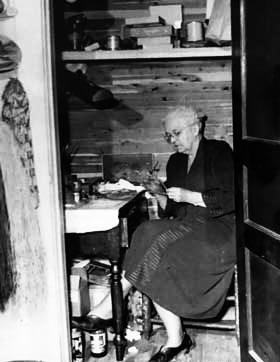
Anne Bradshaw Clopton painting spiderwebs in her closet
Another interesting stop in Huntsville was a visit to the Grave of Miss Baker at the U.S. Space & Rocket Center. Miss Baker was the first monkey America sent into space that survived. The Americans started sending monkeys into space in 1948 but it wasn’t until they sent Miss Baker in 1959 that they achieved success. At that time Russia was already sending dogs into space and recovering them alive. But the animals that America sent into space unfortunately kept dying. These poor creatures would often explode in the rockets or on impact when they returned, and some were lost in their capsules at sea. The American Space program had purchased a dozen monkeys including Miss Baker from a pet shop in Miami. She stood out from the others during testing as she could withstand confinement and surgically implanted electrodes well. In the end Miss Baker who was a squirrel monkey and Miss Able a rhesus monkey were picked to be sent into space. The two were fitted with caps and jackets to wear and crammed into metal monitoring capsules which kept them confined. Electrodes were surgically placed in the monkeys. On the morning of May 28, 1959, the two monkeys were put into a Jupiter rocket and shot 300 miles into the sky. The flight lasted 16 minutes and over half of the time consisted of weightlessness. The rocket landed safely, for the first time in the Atlantic Ocean. Both monkeys were pulled from the capsule alive, unfortunately poor Miss Able died four days later from too much anesthesia given to her when the surgeons attempted to remove her electrodes. Both monkeys were on the cover of Life Magazine. Miss Baker became famous, she received letters from hundreds of adoring fans and was given a cushy lifestyle living at the Naval Aerospace Medical Center in Florida. She was married twice, her first husband Big George whom she married in 1962 is buried beside her, he died in 1979. Only three months after Big Georges death Miss Baker married Norman. Miss baker died of kidney failure in 1984 at the age of 27. She is also the second longest living squirrel monkey on record.


Graves of Miss Baker & Big George
We stayed in Huntsville Alabama for two nights at the Monte Sano State Park in a cold and torrential downpour. The rain was relentless and never ending. For two days straight, we sat in the Roadtrek listening to the rain pounding our van as the news on the radio told us we were surrounded by a Flood Warning Zone. Lucky for us we were at the top of a mountain and no flood came. After two days we were able to be back on the road driving safely towards Iuka Mississippi and the Apron Museum. Many rivers had swelled and broke their banks but the roads remained safe.


Campground Monte Sano State Park
When I read about the apron museum, it just seemed so unique and unusual that I just had to go. Guy, well he just rolled his eyes…. The museum has a collection of over 6,000 aprons from all over the world. People have sent, sold, and donated aprons to this museum. There are Civil War Aprons, Era Depression Aprons, Flo’s apron from the Progressive Insurance commercials, autographed of course, funny aprons, aprons with holiday themes like Christmas and Valentines, and Japanese aprons with seeds sew into the cuffs. The couple who are the owners and curators are quite chatty and they had quite a story regarding the Japanese Aprons. Maybe not so much the story but the way they told the story. So they had these two Japanese Aprons and discovered by feel that there were seeds in the cuffs. Not knowing why, they tried Googling but found no information. One day a Chinese lady came in to the museum and they thought they would ask her if she knew why seeds would be sewn into the apron sleeves. Now to their sheer amazement the lady googled on Chinese Google. They could not believe there was more then one Google in existence. They were so stunned about this that they kept repeating it in their story. The Chinese google search turned out to be a success and they learnt these were sewn into the cuffs to bring prosperity and good luck. Another fun story from the museum is about another customer at the museum, a young man from Iowa who was also very friendly and chatty. He was there to buy an apron for his mother-in-law. Some of the aprons but not all of them are for sale. The day we visited was a few days before Valentine’s Day and the gentleman chose a heart shape filled Valentine themed apron for his Mother-In-Law?? The Apron museum did turn out to be quite an interesting and fun stop.


The Apron Museum
After the Apron museum in Alabama we returned to Mississippi and just had to stop in Tupelo, the birthplace of Elvis. On the street where he lived there is a replica of the small house his father had built and surrounding the house are engraved granite blocks indicating each year of Elvis’s life. There is also a replica of the church Elvis attended where he first started singing gospel music.


Elvis’s Boyhood home - Church - Fountain of Life
In downtown Tupelo we held hand with Elvis statue. This statue stands in a park where Elvis performed two concerts on September 1956, called “The Homecoming Concert” and received the “key to the city”.


Touching the Hand of Elvis - Guy wasn’t half as excited as I was
We visited the original Tupelo Hardware Store where Elvis bought his first guitar. The gentleman in the hardware store told us the story of how Elvis’ mom had brought Elvis here in 1946 to buy a bicycle that Elvis has seen in the window. They could not afford the bicycle so Elvis asked his mother for a rifle he had seen instead. His mother did not want to buy him a rifle so they compromised on a guitar. They bought the guitar for $7.90. The guitar is not in the hardware store as a collector now owns it but he did bring it back to the store one day for the employees to see and take pictures. So there are pictures of the guitar in the store.


Tupelo Hardware & picture of Elvis guitar
Our last stop in Tupelo was the Famous Johnnie’s Drive-In. This is where Elvis would stop for a cheeseburger and a RC Cola with his friends. Our expectation of this diner was that it would be all shiny, white, and touristy. Well we were pleasantly surprised when we entered. It was well kept and clean and it still looks like from back in the day. The worn wooden booths are original and the one we were lucky and honoured enough to sit in was the actual one that Elvis would always sit in. Guy actually sat in the exact spot where Elvis had sat in the days. One gentleman joked that each time he sits in that seat he gets the dancing wiggle like Elvis. There is a plaque on the wall in the booth saying “Elvis Booth” and a picture of Elvis sitting there. The waitress told us that some people would actually wait as long as 45 minutes to have the privilege to sit in the famous “Elvis Booth”.


The famous Elvis Booth
The place is small and jam packed with Elvis memorabilia. The food was delicious, inexpensive, and some of the best and friendliest service we have had. One funny story when we arrived at the diner we parked in what we thought was the parking lot but as it turns out we had parked in the “Drive-In” section for the diner. Still to this day the drive-in offers outside service. A waitress literally walks up to the vehicles, takes orders, and goes back in the diner to place it. No fancy intercom systems here.


Johnnie’s Drive-In
It was now time to start our travel south towards, hopefully to warmer weather. We drove toward Jackson Mississippi on the beautiful scenic Natchez Trace Parkway. The northern section of the Parkway is a bit busier than the initial section we did from Natchez going north, but it’s just as scenic and beautiful. Guy still loved it. Such a relaxing drive. As before, there are many opportunities for scenic and historical stops along the way. We stopped at the Pigeon Roost which at one time was the roosting area for millions of passenger pigeons which have now become extinct. It’s hard to imagine so many pigeon roosting in one area at one time. Just imagine the cooing sounds. Further down the road we made a stop at Pharr Mounds which is an area with mounds that were built over 1,800 years ago. One more stop was a short hike around the Cypress Swamp. This area was so beautiful and majestic it was well worth the walk.


More of the Scenic Natchez Trace Parkway


Pharr Mounds & Cypress Swamps
From Jackson, at the end of the Parkway drive, we headed east out of Mississippi. We drove towards Montgomery Alabama. The Mothers of Gynaecology Monument and Museum in Montgomery was one of those special “must see” museums for us to visit. The story here is again so tragic. The Mothers of Gynaecology refers to three young women: Anarchy, Lucy, and Betsey. These three were enslaved young women who worked on different plantations near Montgomery in the 1840’s. All three developed a painful condition after childbirth that would cause them to loose control of their bladder and bowels. Enslaved women with this condition were kept separate from the other workers and were made to feel ashamed. The plantation owners who owned these women wanted to find a cure, not because they cared for them but because they could no longer bear children or work. They asked Dr James Marion Sims to help them. This doctor though, had no previous training in treating female patients but was very interested in medical advancement and experimentation.


The Mothers of Gynaecology Monument and Museum
Based on a coincidental discovery made while positioning patients for surgery he believed that a cure for these women was possible. He made arrangements to care for Anarchy, Lucy, and Betsey at his own cost, and promised their owners he would return them cured within six months. So with these three women and seven other women with the same painful condition he put up a tent on the side of his medical practice for what he referred to as “these Negro Surgical Cases” with 12 patient beds and he began his experiments. The surgeries were performed without anaesthesia, even though Dr Sims was aware of opium’s painkilling effect. He did not feel these surgeries to be painful enough to warrant the use of opium. Many times the surgeries were performed in front of an audience of other doctors. It is believed that Anarcha endured the most surgeries with 30 surgeries over a 3½ year time span. Even though Dr. Sims said he had received consent from at least one of these women, in those days enslaved persons were not legally entitled to refuse, so it is highly unlikely he had received consents. In 1849 Dr Simms performed a final surgery on Anarcha claiming to have cured her with the use of silver thread and a clamp suture mechanism. After his results were published, he moved to New York City to seek his fame and fortune. Within ten years Dr James Marion Simms would become known as the Father of Gynaecology. As for Anarcha, Betsy, and Lucy, after the five years of dehumanizing cruel experimentations, they were returned to their enslavers.


Anarchy, Lucy & Betsy - The Mothers of Gynaecology
The Mothers of Gynaecology Monument and Museum, we felt, is located in a sketchy area in Montgomery. Driving there, we encountered groups of young men standing on street corners watching us go by. Driving by, we definitely wondered if we made the right decision, luckily we had. This museum is an extremely powerful and reflective place. The three statues depicting Anarchy, Lucy, and Betsey which were created from discarded pieces of metals like scissors, metal hinges, bits of glass, and anything scrap, for me are some of the most powerful, emotional, and beautiful artwork I have ever had the honour to see and experience. The details are so fine that we could feel the women’s expressions, emotions, and pain. Powerful.


Anarchy, Lucy & Betsy - The Mothers of Gynaecology
The Civil Rights Memorial Center is a bit of a different take on the Civil Rights Movement. Located just outside the building is a circular black granite table with water cascading that has engravings of major events of the movement and also the names of 40 men, women, and children who were killed during this struggle. As I entered the museum I walked into The Martyr Room. This room has pictures and the stories of the 40 people who’s names are engraved on the memorial sculpture outside. Some of these people include Martin Luther King and Emmitt Till. There are the names of five of the children that were killed on September 10, 1963 in Birmingham from the Ku Klux Klan bomb at the 16th Street Baptist Church. There is also Jonathan Myrick Daniel a white student from New England who came to Alabama to support Black voting rights. He was arrested at a demonstration and then shot minutes after his release by a part-time deputy sheriff. Ben Hester White who was a black plantation worker and was not involved in civil rights. The Ku Klux Klan tricked Mr. White into looking for a lost dog and then murdered him. This was a plot by the Ku Klux Klan to lure Dr Martin Luther King Jr. to southern Mississippi, so they could assassinate him. These are just a few of the many, many stories here. At the end of this museum journey is the Wall of Justice which is a 20 by 40 foot digital screen with the names of over half a million people continuously cascading down the screen. There is another screen here that displays a beautiful poem called “A Civil Community” written by Kwame Alexander. It’s a serene place, a chance to reflect and take in all the stories and information from this movement.


The Civil Rights Memorial Center
Our last stop in Montgomery was the Hank Williams Museum. This museum is filled with memorabilia, instruments, personal artifacts, and many of Hank’s suits, hats and cowboy boots. There are three life size portraits that were in Hank & Audrey's home and the microphone and stand Hank used during his last performance on New Years Eve December 31, 1952 in Charleston West Virginia. Hank's 1952 Baby Blue Cadillacs is on display, the car Hank Williams died in. He was scheduled to perform in Canton Ohio on New Year’s Day after a New Year's Eve concert. He was driven in his blue Cadillac to Knoxville Tennessee where he was going to catch a flight to Canton but due to fog the flight was canceled. Hank and his driver returned to the hotel in Knoxville while there Hank collapsed in his hotel room but still was given the go ahead to travel. While driving to Canton for the concert Hank Williams died of a heart attack in the back seat of the Cadillac. He was only 29 years old. Hank, it is said, was in bad health due to alcoholism, prescription drug abuse, and chronic back pain. He was born with spinal bifida occulta a birth defect that affected his spinal column. He injured his back during a fall on a hunting trip to Tennessee in 1951 which aggravated his existing back pain. He was also treated for Marfan Syndrome. This is a genetic disorder that affects the body’s connective tissue which can potentially lead to problems with the heart, lungs, eyes, and bones. The syndrome is often characterized by a person who is tall and thin with long limbs and fingers, and most commonly cause complications related to the aorta, the body's largest artery; unfortunately there is no cure. Hank was 6 feet tall and weighed only 145 lbs when he died.


Montgomery Alabama & Rosa Parks
There were no photographs allowed in the museum as per the wishes of the people who have loaned items to the museum. The museum staff took a photograph of us standing in front of the blue Cadillac but that was the only photograph allowed.


Hank Williams Blue Cadillac
To Kill a Mockingbird and In Cold Blood two of my all time favourite books. So while in Alabama a trip to Monroeville was a must. The Old Court House Museum was amazing. This is where Harper Lee’s father practised law and this is the courthouse that was used as a model for the movie set. The movie with Gregory Peck was filmed in Hollywood not in Monroeville. This museum has lots of history, pictures, and quotes from Lee Harper. Interestingly her book jacket photo for To Kill A Mockingbird was taken by her friend Truman Capote. It also states that Harper Lee modelled the character Dill, in To Kill a Mockingbird, around Capote’s character traits. And Truman Capote used Harper Lee for the character Isabel Thompkins in his first novel named Other Voices Other Rooms. In another section there is information regarding Truman Capote with photos from his childhood, letters he wrote to his Aunt Mary Ida and the typewriter he used.


The Courthouse

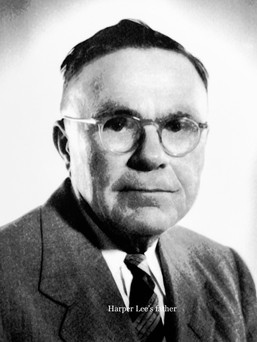


Harper Lee


Truman Capote
Truman Capote came to live in Monroeville with his mother’s family the Faulks. He lived here between 1927 to 1933 and would spend his summers there for several years afterwards. They lived next door to Harper Lee and her family and the two became lifelong friends. The Faulk house where Truman Capote lived burned down in 1940 and a second home was demolished in 1988. Harper Lees home was demolished as well for commercial buildings. Mel's Dairy Dream and ice cream shop has been operating on this site since 1950. We stopped to take photos of what remains of the house foundation and the ice cream shop and were given free ice cream which we must say was absolutely delicious.


Original locations of Harper Lee & Truman Capote homes and our delicious ice-cream
We travelled further south in Alabama to Fairhope to visit the Hermit Hut of Tolstoy Park. Another one of our quirky stops. This hut was built by Henry Stuart in the 1920’s. Henry was originally form Napa Idaho and at the age of 65 years old he was diagnosed with tuberculosis. Doctors told Stuart he only had a few months to live and advised him to move to a warmer climate for his health. Stuart purchased 10 acres of wooded land in Baldwin County Alabama (sight unseen), packed up his things, and moved there. He called this Tolstoy Park for the Russian author Leo Tolstoy, who Stuart knew was a hermit before his death. Tolstoy was one of Stuart’s favourite authors and his personal philosophy was also similar to Tolstoy's.


Hermit Hut of Tolstoy Park
He built himself a small, simple, round home that was only 14 feet in diameter made from bricks and hand-made concrete blocks. The floor level of the house was set 16 inches below the surrounding land for a more constant interior temperature. By 1925 Stuart’s little hut was done. His bed was a rope-strung hammock high above floor level and he used a ladder to access it. Stuart ended up living for another 22 years. During his lifetime he became known as the Hermit of Montrose, the name of the area that is now part of Fairhope. Stuart also became a well-known writer and philosopher. He became famous and thousands of people would come to visit him. He died in 1946 at the age of 88 years old. Tolstoy Park is no longer the original ten acre park, but the hut is still there and is now located in what is now a parking lot surrounded by office buildings. There are plans to move the hut to a different location in the near future.


Henry Stuart & inside the Hermit Hut
We decided to drive along the Gulf Shore coast of Alabama as we head to Florida. Our last stop in Alabama was in Daphne to see the Athletes Made of Junk Statues at the United States Sports Academy. These were spectacular statues. All are made of welded scrap metal. We could really see and feel the movement and athleticism of these statues. There was a basketball player shooting into a hoop, football players tackling, a gymnast on the balance beam, a variety of cyclists, a golfer, and a swimmer emerging from the ground. There is an oak tree on the grounds that was grown from an acorn from the tree that was presented to John Woodruff, the winner of the Men’s 800m at the 1936 Olympic Games in Berlin Germany.


Athletes Made of Junk Statues & the Oak Tree
We also walked along the Town Boardwalk to see alligators but unfortunately no alligators to be seen. The alligators, it seems, are probably hibernating with the cold weather. All was not lost as we did get to check out a cute little gecko on the hand railing, he even posed for us.


Daphne Gator Boardwalk


Friendly Gecko
We have read that Mississippi and Alabama are the “poorest” states in the U.S.A. We must say though, that they are both rich in kindness, hospitality, smiles, and beautiful sceneries. Mississippi your shorelines are sprawled along the Gulf of Mexico and the Mississippi River. You have enriched us with your kindness and generosity. Alabama we only had fleeting glimpses of your history and friendliness which captivated us. While driving your roads, we seemed to have spent more time being chased by bad weather and found ourselves seeking the warmth of your sunshine. From both of you we have learnt that our histories, north or south, are profoundly intertwined; we learn them, we live them, and because of them we became better and kinder humans.


Comments